My story...
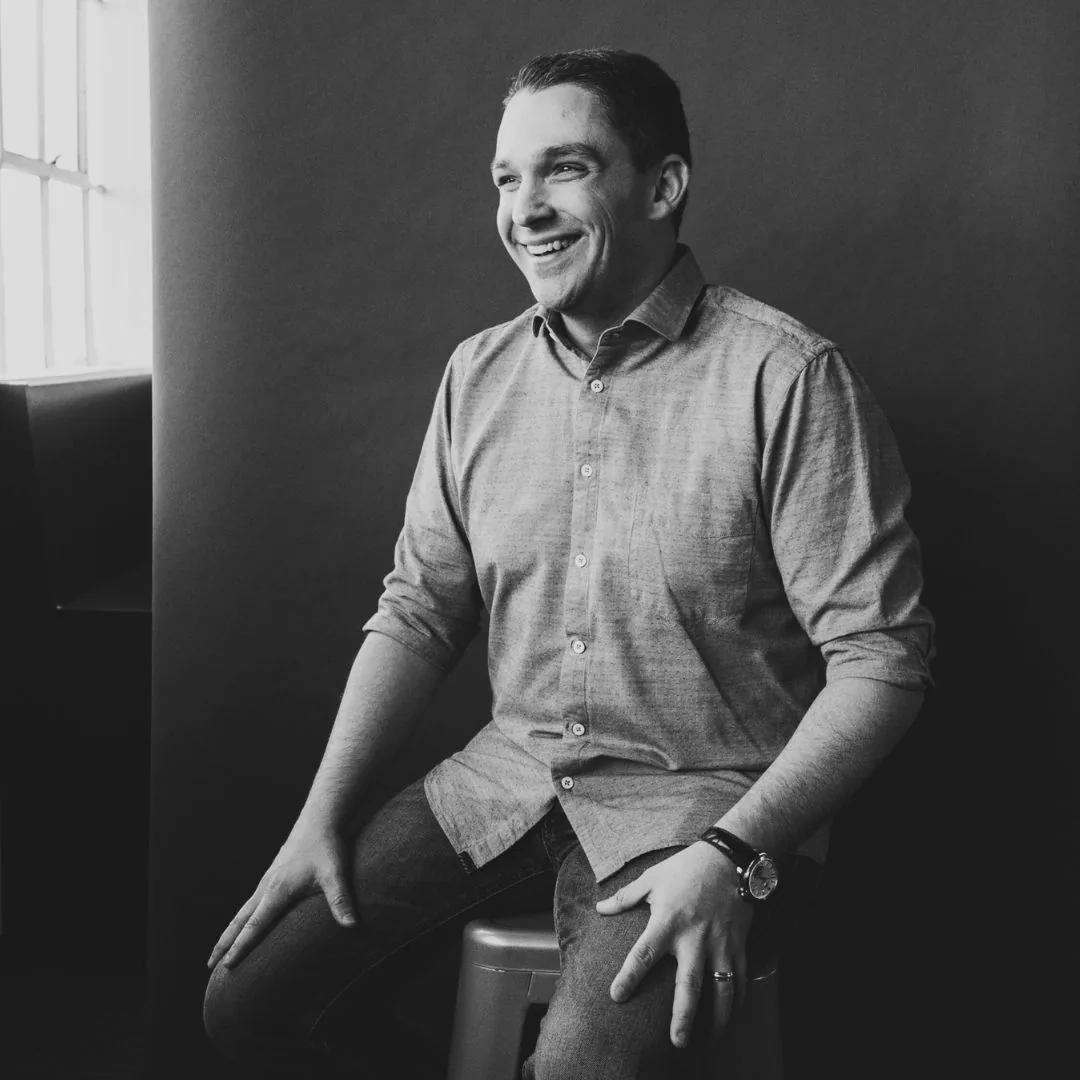
Hi, I'm Ryan…
I've started businesses from my dorm room, scaled eight companies to eight figures, fired myself, nearly gone bankrupt (twice), and somehow managed to exit four companies (yay!).
I've also spent the last 25+ years learning the same painful lesson over and over again, which is:
“The more valuable I am to my business, the less valuable my business is.”
I teach what I teach because of a mistake I made (that hopefully you don't have to repeat). Here's how it happened…
Phase 1: The Beginning (1999–2003)
I was an 18-year-old freshman at The University of Texas at Austin in 1999, living in a dorm room with the rarest commodity on campus at the time: high-speed internet. The first dot-com boom was in full swing, and I'd started building basic websites for anyone who'd pay me.
That fall, at a futuristic-themed costume party, I met a girl named Emily. I was wearing full-body blue spandex with a duct-taped "M" on my chest and calling myself "Millennium Man," and somehow she still talked to me.
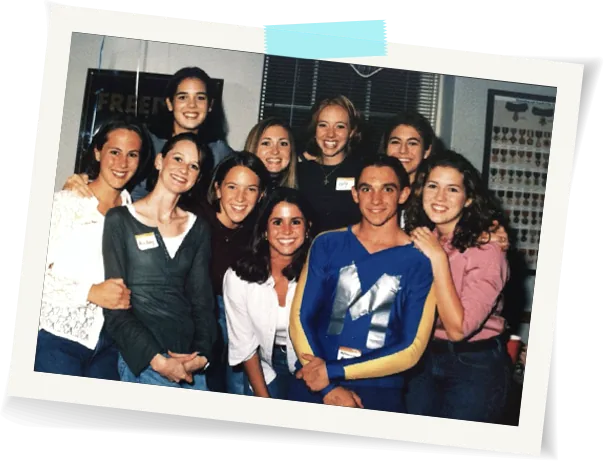
I knew pretty quickly she was the woman I was going to marry. (But I didn't tell her that… even I knew how creepy that sounded.)
But marrying her meant buying her a ring, and rings cost money, so I needed a business that actually worked. My first paying client tried to fire me until my "ugly" landing page (just a headline, a few bullets, and a form) beat the expensive designer's "beautiful" Flash page in a head-to-head split test.
The Lesson: Sometimes "ugly" works better than pretty.
My second client was a lactation consultant who couldn't actually pay me, so instead she gave me an ebook she'd written on "How To Make Homemade Baby Food." I put it online for $14. Then I sold a copy. Then another. Then a hundred. That became Red House Publishing.
Over the next few years I built 100+ niche websites… each one just a sales letter, an order button, and a sliver of an audience. By the time I graduated from college in 2003, I'd earned enough for the ring, and Emily and I got married that same year.
Phase 2: First Million, First Scars (2004–2008)
By 2004, Red House Publishing was a real business generating real, predictable (and growing) revenue. Then Google launched its first big algorithm update (a.k.a. the "Florida" update), and my business was nearly killed overnight.
Most of my traffic came from free organic search, and it was gone in a weekend. I pivoted hard into paid traffic and email list-building, and earned my first real entrepreneurial scar in the process.
The pivot revived my sales. The problem? My profit disappeared, and I didn't even realize it.
Two years later, I was sitting in a bar in Dallas with about a quarter-million dollars in debt, trying to figure out what had gone wrong and what I should do next. I pulled a cocktail napkin off the table and wrote down what I now believe is the only question that runs every business:
“How do we acquire customers profitably and predictably?”
…then I sketched out an answer.
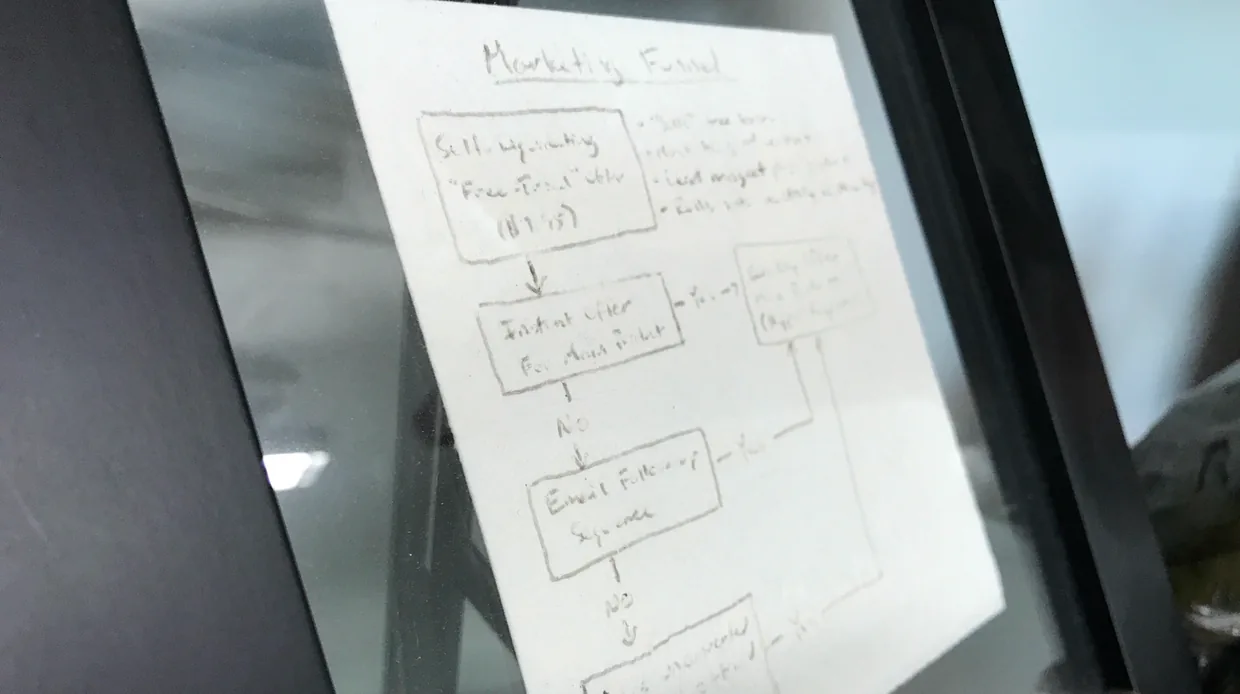
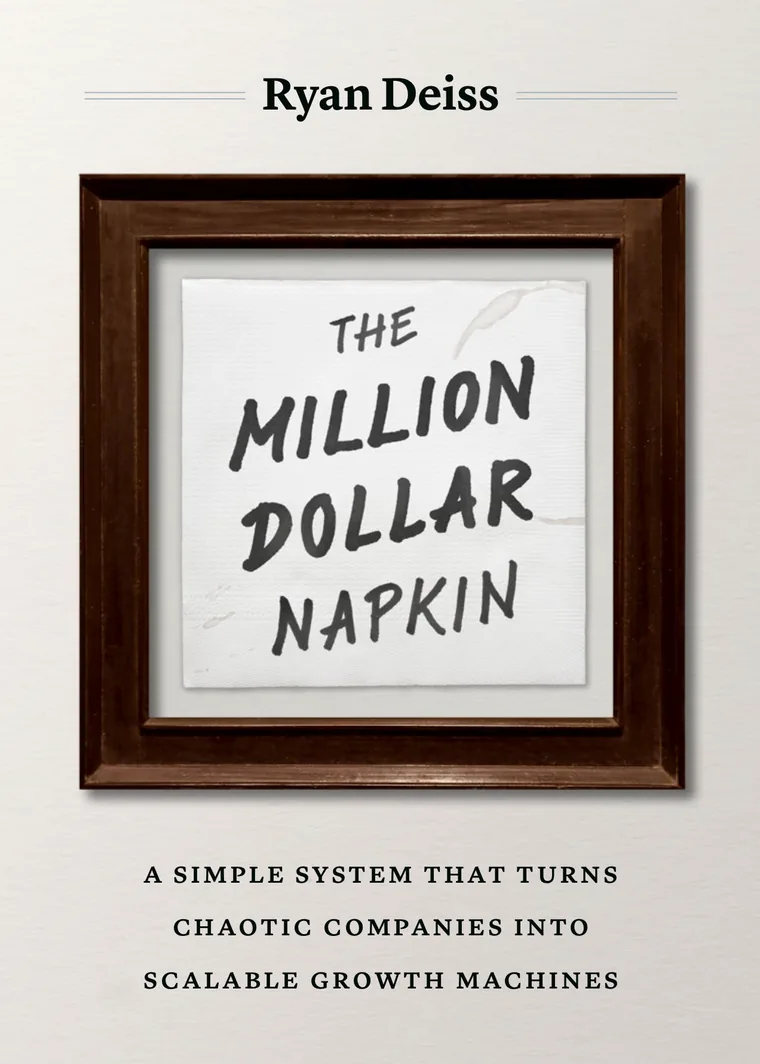
That napkin became the philosophy I'd spend the next twenty years refining. (It's also the namesake of the book I've got coming out in early 2027.)
That year (2006) was my first million-dollar year… all because I followed my "napkin plan." It was also the year I became a dad.
The Lesson: Until you understand how customers actually happen, you'll never scale profitably.
Phase 3: Building the Engine (2009–2012)
Eventually, I rebuilt Red House Publishing into what I thought was something more scalable and "legitimate."
I called it Idea Incubator, and I organized the business around three pillars… health, finance, and business… with real influencers as the face of each brand instead of faceless ebooks. By 2011, we were doing roughly $12M a year.
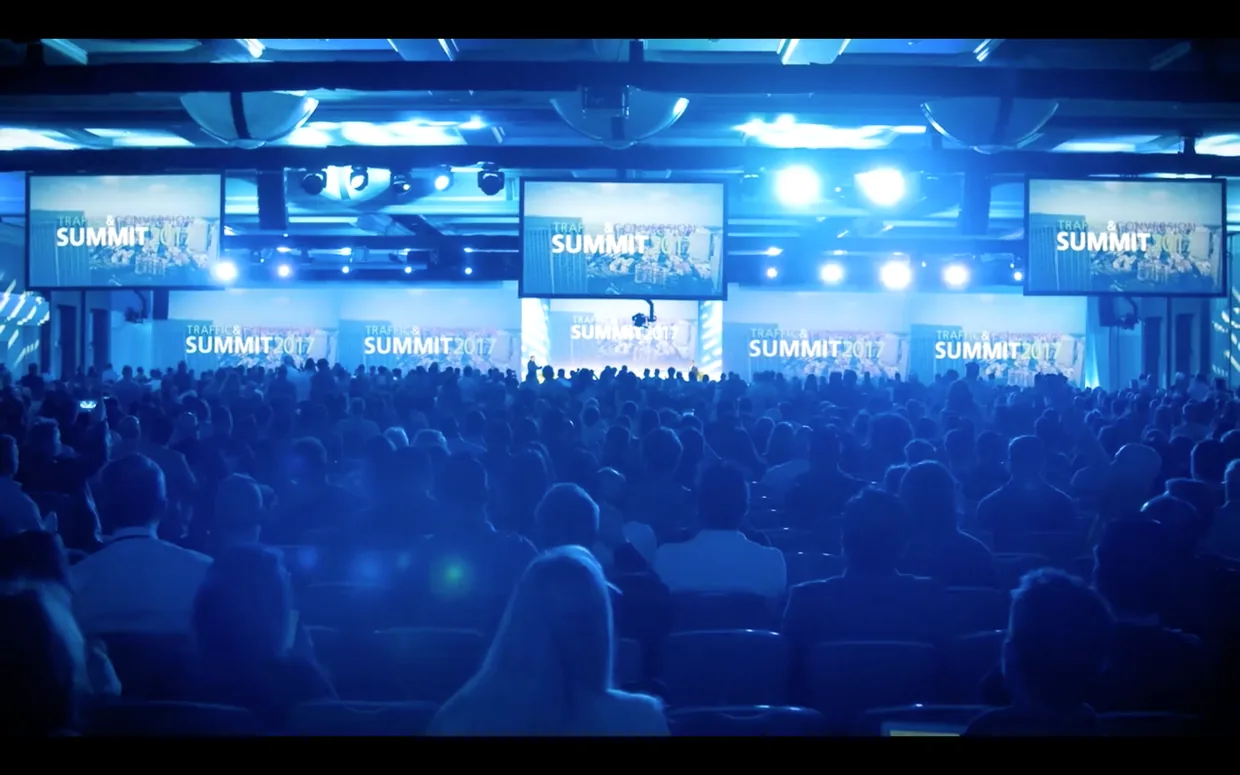
Along the way, in 2009, my partner Perry and I hosted something called the Traffic & Conversion Summit. 289 people showed up. We had to sell 2010 tickets to pay for the 2009 event, which meant we had to run another one… at which point we realized we were in the event business whether we wanted to be or not. On Day 3 of T&C 2010, we launched DigitalMarketer.com.
By 2011, though, Idea Incubator's revenue had flattened, and I was burned out. And that's when I made the worst decision of my entrepreneurial life: I fired myself as CEO and brought in a corporate executive to run the company.
It was a disaster.
Within 9 months, all our best employees had either quit or been fired, and the business was nearly bankrupt. I stepped back in and rebuilt it, but it cost me millions of dollars and over a year of 80-hour weeks.
Somewhere in all that chaos, my third child was born. My fourth arrived in 2012.
The Lessons: Don't quit on a bad day. And don't install an operator before you've installed the operating system.
Phase 4: Scaling Too Fast (2013–2015)
Around 2013, my partners and I started a new company called Native Commerce… the third iteration of my original "dorm room startup."
The thesis was that media businesses monetize better through owned ecommerce brands than through advertising, and when our first media property (Survival Life) launched a successful knife brand (Hoffman Richter), it gave us all the proof we needed that our concept would work.
And it did work. We scaled our media properties from outdoor, to home and gardening, to crafts, to women's interests and more, and each media property spawned multiple related ecommerce and DTC product brands.
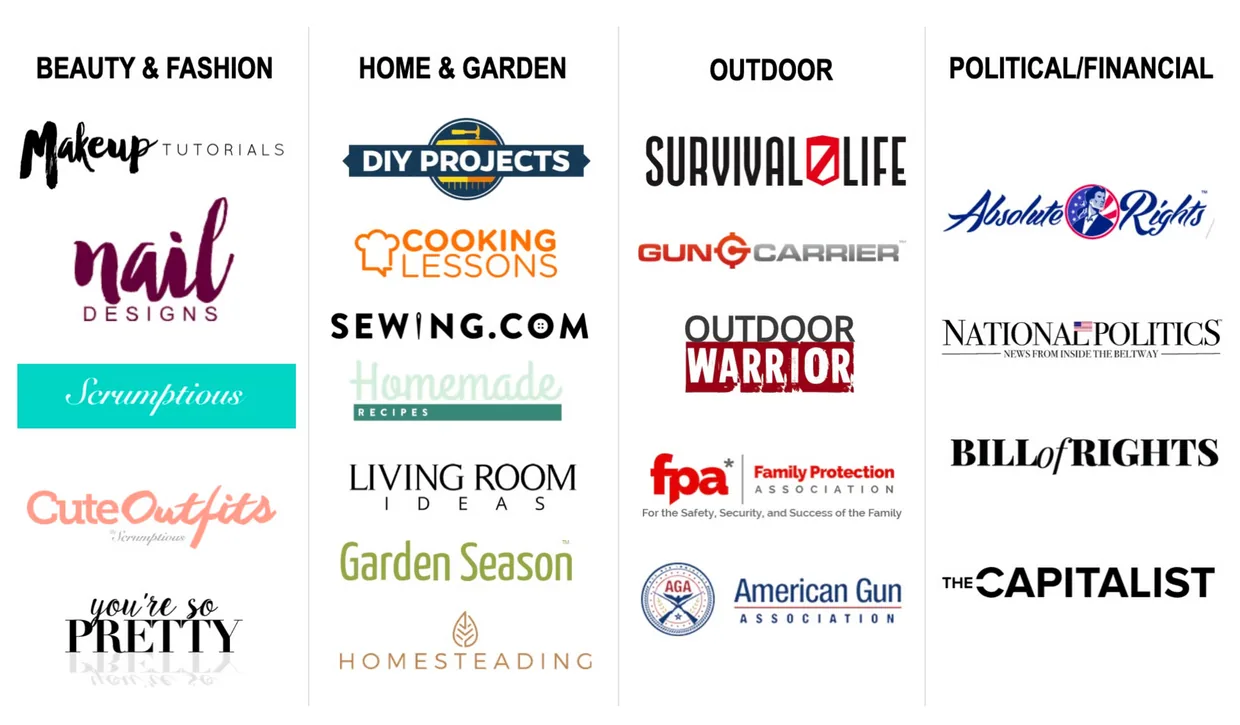
Revenue went from $500K in 2013 to $3M in 2014 to $38M in 2015. We had five independent 7- and 8-figure brands operating at once, hundreds of employees, warehouses in Texas, California, and Las Vegas, and a regular travel schedule that included buying trips to China.
For about 18 months, it felt like we'd finally figured it out.
Phase 5: The Reckoning (2016)
2016 was supposed to be my best year. I had three companies on the Inc. 5000 list simultaneously.
From the outside, I was winning. From the inside, the business was collapsing.
Revenue cratered from $38M to $12M in twelve months. We had the demand, but we didn't have the cash flow to support it. The backorders piled up, sales fell off a cliff, but payroll had to be made. Within 6 months, we went from "growing and profitable" to out of cash. By year-end, we were forced to lay off two-thirds of the team just before the Christmas holiday buying season.
And things weren't any better at home.
I was (again) working 80-hour weeks, leaving for work before anyone was awake and returning home after everyone was already in bed.
One night, things reached a breaking point.
I returned home (well after midnight) and found my wife sitting up in bed… eyes red. And that's when she said the line I'd been working so hard to avoid hearing:
“You can keep doing what you're doing. But you can't pretend you're doing it for us anymore.”
That was the moment everything changed, because that was the moment I finally heard the truth I already knew but couldn't admit.
The Lesson: Growth without systems is just expensive, painful chaos.
Phase 6: Sell, Step Back, Rebuild (2017–2020)
In 2018, we sold Traffic & Conversion Summit to Clarion Events Ltd., a Blackstone-owned company, in a mid-8-figure exit. DigitalMarketer peaked at $23M that same year. On paper, it was the closing chapter of a winning decade.
In reality, I spent most of those two years sitting with what Emily had said, walking through every business I'd ever built and noticing the same fatal flaw: Each one ran on me. My brain was the operating system.
Without me, nothing worked.
With me, things worked really well (for a while), and then collapsed under their own weight.
I spent a lot of that time walking and praying, and came to a conclusion I didn't love: I'd been a bad steward of the very thing I kept saying I was building for my family.
I wasn't building businesses… I was building profitable prisons and then locking myself inside them.
I didn't come up with the idea of a "founder-optional" company (one that runs, grows, and could even sell without its founder in the middle of it) and the concept of the "Scalable Operating System" because it sounded good. I came up with it because I needed a way out… and there wasn't one. So I had to build it.
Every framework I teach exists because of a mistake I made first. The systems aren't built on theory… they're built on scar tissue.
The Lesson: The more valuable I am to my business, the less valuable my business is.
Phase 7: The Founder-Optional Holding Company (2021–Present)
In 2021, my partners and I founded The Scalable Company. The mission is simple: help founder-CEOs build businesses that scale without depending on them.
Because here's the thing… the more valuable you are to your business, the less valuable your business is. That isn't a clever line, and I didn't make it up to fit on a t-shirt. It's the diagnosis of my own life, and the lens through which I now look at every company I work with.
Today, we help founders build better businesses, not just bigger businesses. Because I no longer want to run a company where I'm essential, and you shouldn't either.
The Lesson: TBD. (Subscribe to my newsletter to find out.)
What I'm building now
My day job
Strategic advisors to 300+ founder-CEOs. We also acquire and invest in the companies we advise.
Click here to learn more about our services and to see what it's like to work with us...
Teaching & sharing
A weekly newsletter about all the stuff they DON'T teach you in business school (but you actually need to know to run a business). 42,000+ founders read it.
The podcast I co-host with my partner, Roland Frasier, where we “open the kimono” on all the stuff that's working (and not working) in our businesses.
Long-form breakdowns of the frameworks and tactics I'm using to build, scale, exit, and (occasionally) break the companies in our portfolio.
Books I've Written
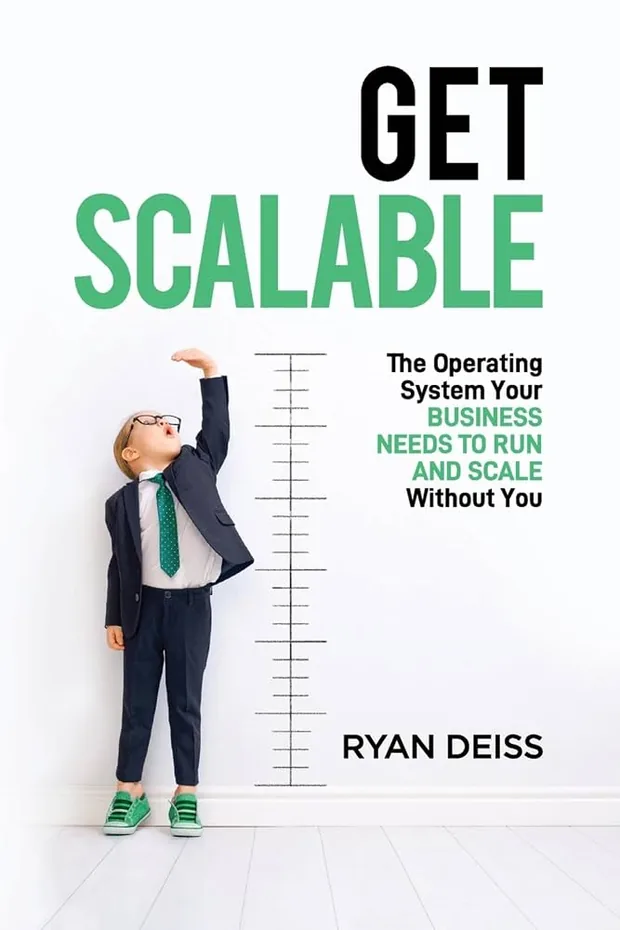
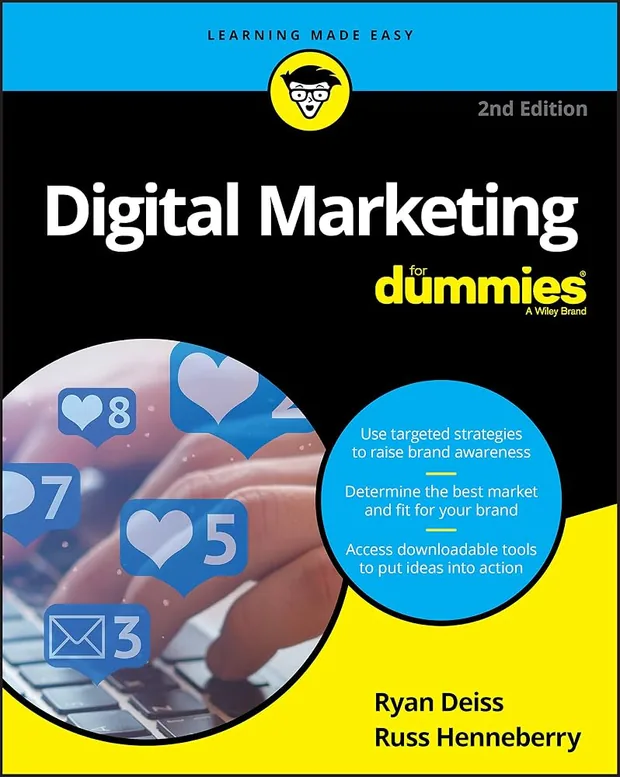
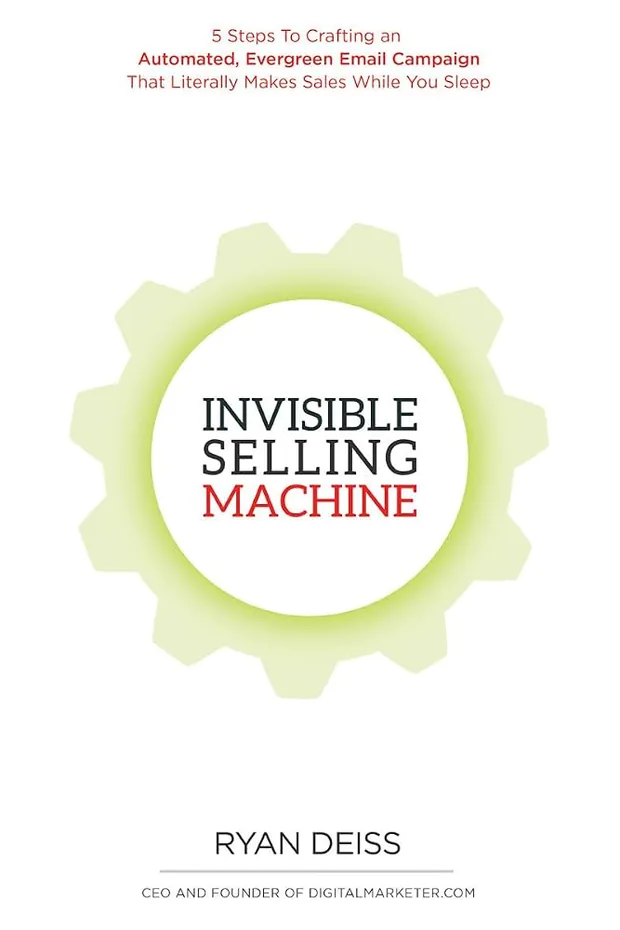
I've written several books on scaling, systems, and founder-led growth...
Things I believe
Things I believe (that sometimes get me into trouble)…
“The more valuable you are to your business, the less valuable your business is.”
“Good people don't fix broken systems. Broken systems break good people.”
“The goal is not to build a company full of 'rockstars' and A-players. The goal is to build a company that doesn't require them.”
“The ultimate sign of a healthy business isn't growth, customer satisfaction, or even profitability… it's the ability to distribute big, fat chunks of cash each and every quarter.”
“Most company mission and vision statements are just entrepreneurial arts and crafts.”
“Visionary and Integrator are fake job titles.”
“An annual plan is just a New Years Resolution for business owners (and most are abandoned by February).”
Subscribe to my newsletter
Get the systems and playbooks you need to scale your business and engineer your “ideal exit.”
I write a weekly letter called The Accidental MBA.
It's the stuff they don't teach in business school… the frameworks, lessons, and real-world examples you can only learn from running, scaling, and exiting real companies.
42,000+ founders enjoy reading it every week. (You probably will too.)
Subscribe To Accidental MBA